

CLASSIC TEACHINGS
Thankfully, the classic teachings from some of the most inspired preachers from the 18th, 19th, and 20th centuries have been archived and preserved and we will be happy to bring you these teachings over time to encourage, inspire and deepen our understanding. Some of those teachers are listed below.
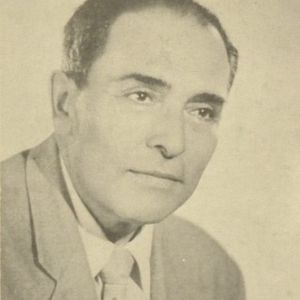
Hyman Appelman was born in Russia to orthodox Jewish parents who moved to America in 1914. Appelman became a trial lawyer in Chicago. At age twenty-eight he was converted to Christianity, causing his parents to disown him. His father said to him, “When your sides come together from hunger and you come crawling to my door, I will throw you a crust of bread as I would any other dog.” Feeling a definite call to preach, he attended Southwestern Baptist Theological Seminary and became one of the greatest evangelists of his generation. Dr. Appelman made eight or nine trips around the world and several trips to Russia as an evangelist. It was hard to find a day in his long ministry of fifty-three years that he was not preaching somewhere. He was the author of some forty books.
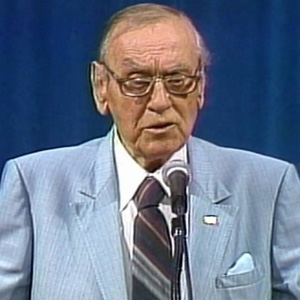
Bascom Ray Lakin was a Baptist pastor and evangelist. He was born in the hill country of West Virginia, the son of a farmer and distant relative of Devil Anse Hatfield, of the feuding Hatfields and McCoys. He was saved at age 18 and ordained to preach in 1921. He attended and graduated from Moody Bible Institute and began pastoring in his home region. In 1939, he was called to assist E. Howard Cadle at the Cadle Tabernacle in Indianapolis, Indiana, a church tof over ten thousand and home of a daily radio program, “Nation’s Family Prayer Period.” In 1942, Cadle died and Lakin became the senior pastor and continued the broadcast. Heard on the powerful WLW AM radio station in Cincinnati, Lakin preached to virtually the whole country each night. It has been said that B.R. Lakin was the first ‘mega-church’ pastor 50 years before the term was even coined. He pastored the Tabernacle for 13 years before entering full-time evangelism in 1952. Until his death in 1984, Lakin preached all over the world and saw over 100,000 conversions to Christ. In his later years, he was a member of Jerry Falwell’s Thomas Road Baptist Church in Lynchburg, VA.
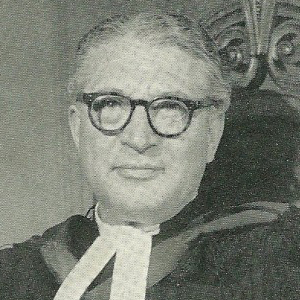
William E. Sangster was one of the great British Methodist preachers of the 20th century. He did all he could to hold the Methodist denomination to its Biblical roots during the tumultuous times of religious compromise. He ascended to the pulpit of London’s Westminister Central Hall in 1939, just in time to lead his congregants through the terrors of World War II. His great sermon, What If Calamity Comes? deals with those times. His sermons were regularly halted by bombings in the city. Sometimes he preached through them, telling hearers, “Those of a nervous disposition may leave now.” During the five years of German bombing, Sangster virtually lived in the great bomb shelter below the church building. In 1949, he was elected leader of the Methodist Conference of Great Britain, emphasizing evangelism and spiritual growth. He was a great student of homiletics, authoring several books on preaching, including The Craft of Sermon Construction. He died in 1960 of progressive muscular atrophy, an incurable neurological disease.

Dr. D. Martyn Lloyd-Jones was born in Wales and at the age of 13 moved to London in 1914. It was here that he trained for a medical career and was associated with the famous Doctor Thomas Horder. During his medical years, he was a much sought-after physician and was well respected in his field. He abandoned his medical career for the Gospel ministry and served as a pastor at the Presbyterian Church at Sandfields from 1927 to 1938. His teachings were respected by many including G. Campbell Morgan. He was offered and accepted the post of the associate pastor under Dr. Morgan in 1938. In 1943 when Dr. Morgan retired he succeeded him as Pastor of Westminster Chapel. His teaching attracted many and his lectures on Friday night were attended by a wide range of the populous. He was loved and admired for his dedication to the scriptures. He retired in 1968 but was much sought after as a special speaker until his death.

Walter Maier held a doctorate in philosophy from Harvard and taught at Concordia Seminary in St. Louis, but is best known for his worldwide radio broadcast, Bringing Christ To the Nations. He was heard in over 120 nations and by over twenty million souls. He was a Lutheran at a time when his denomination was denying the old-time religion. He stood true, extolling the reliability of Scripture and man’s need for the sacrifice of Christ. His preaching was inspiring and direct. Early in his ministry he won the Billings Prize in Oratory and used all of the rhetorical tools of the good communicator. Billy Graham called him the greatest evangelist of the 20th century. In the face of harsh opposition, he never dipped his colors or compromised his principles.

R.G. Lee was the longtime pastor of the Bellevue Baptist Church of Memphis TN. He was a great orator and his sermons never failed to show his skill. He pastored at Bellevue from 1927-1960. During his pastorate there, over 24,000 people joined the church, over 7,600 of these for baptism. Lee is best known for his sermon, Payday Someday, which he preached over 1000 times. He was born in South Carolina and educated at Furman University in Greenville, SC. His first pastorate was at First Baptist Church of Edgefield, SC where Senator Strom Thurmond and his family were members. It was there that he first preached his Payday Someday message. His style was literary but not deep biblically. He ‘painted pictures’ with words and his preaching was eloquent and imaginative.

J. Stuart Holden was one of the great ‘Keswick’ preachers of England. He was a contemporary of F.B. Meyer and G. Campbell Morgan but was more popular in many circles of his day. He studied under H.G.C. Moule at Cambridge and became an Anglican preacher. He succeeded William H. Griffith-Thomas at St. and ministered there for 30 years. He was a very popular preacher in North America and made many trips to the U.S. and Canada. He and his wife were booked on the maiden voyage of the Titanic but were providentially hindered from making the trip. Holden was active in missionary causes like the China Inland Mission. His preaching was vibrant and imaginative. His sermon titles were especially well thought out. In 1914, he preached a message on Daniel 3:18 entitled “But If Not…” which was described as profound and prophetic concerning England’s place in the upcoming World War I.

The “devout dogmatist,” George W. Truett pastored the famous First Baptist Church of Dallas, Texas for 44 years. When he took the pastorate there were 715 members; when he left there were over 7,000. His preaching was powerful, but seldom expository. He preached extemporaneously, following a very limited outline written on the backs of envelopes. His application and illustrations were especially strong, and his delivery was powerful. He was adroit at evangelistic preaching and revivals. In a hunting accident, he killed his best friend and the sheriff of Dallas County. The pain of this event almost drove him from the ministry. It is said that his preaching was “like a cavalry charge.” One biographer said, “He was gifted with access to the human heart.”

G. Campbell Morgan was born in Tetbury, England, the son of a Baptist minister. When he was 10 years old, he heard D.L. Moody preach, which made such an impression that he began preaching himself at the age of 13. Two years later, he was preaching regularly in country chapels during his Sundays and holidays. In 1886, at the age of 23, he left the teaching profession, for which he had been trained, and began devoting his full time to the ministry of the Word of God. He was ordained as a Congregationalist in 1890, having been rejected by the Wesleyan Methodists two years before. His reputation as preacher and Bible expositor soon encompassed England and spread to the United States. He crossed the Atlantic 54 times preaching for many great stawarts of the faith. He preached for his hero Moody many times and, upon Moody’s death, assumed the position of director of the Northfield Bible Conference. In 1904, Campbell became pastor of the great Westminster Chapel of London. His preaching was attended by thousands. He went to be with the Lord on May 16, 1945, at the age of 81. His paramount contribution to the Christian faith lay in teaching the Bible and showing people how to study it for themselves.

Archibald T. Robertson was a scholar and an expositor. As the author of more than 40 books and a professor at Southern Theological Seminary in Louisville, KY, he influenced hundreds of thousands in their Christian life and service. His books are still on the shelves of preachers and teachers today, especially the great Word Pictures of the New Testament and his commentaries. He was sometimes severe in his preaching style as he was blunt and direct, but he also possessed a good sense of humor and delighted audiences with references to Deacon Skinflint, Sister Sharptounge, and Dr. Dry-as-dust. The Greek language was his specialty; he preached with a Greek New Testament in his hands. He was born in Virginia and grew up in North Carolina. As a youth, he had a speech impediment, which he overcame by preaching.
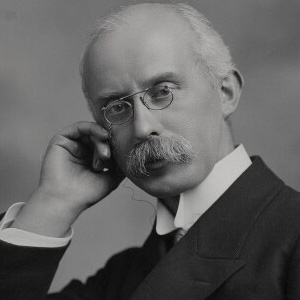
John Henry Jowett was an English preacher who became known as the “greatest practitioner of the homiletic art of his time.” He grew up in a Christian home and always gave credit to his parents for what he became. He also credited his childhood Sunday School teacher as a great influence. His teacher’s vivid lessons made a great impression. He pastored numerous great churches in England and crossed the Atlantic to preach in America many times. He was a stylist of preachers who cared greatly for words, so much so that he studied the dictionary as a textbook. His sermons were well studied, but not bookish, always committed to the grand themes of the Christian faith. He was a voluminous writer, with many of his works still in print today.

Billy Sunday was a colorful and powerful preacher who preached to hundreds of thousands at the turn of the 20th century. He got his start in preaching by helping J. Wilbur Chapman (see his bio below) in his revival campaigns. Chapman schooled him in doctrine and homiletics. In 1898, he set out on his own to preach. His crusades became regional events, with thousands turning out to hear him. He became as well known as any man in America, including the president. He had been a baseball player before his conversion, and was known in his early ministry as “the baseball evangelist.” His preaching against “booze” was one of the main influences for prohibition. He was a conservative and a fundamentalist. Because he was direct in his style and often uncouth, he was accused of being somewhat of a buffoon. Though he used homey illustrations and backyard metaphors, his preaching was filled with the Bible. Many old-line preachers despised his aggressiveness and his know-it-all demeanor. It was easy to take shots at a man like Sunday, but no one could gainsay the thousands who accepted Christ after his preaching.
- Motherhood
- The Blood of Jesus Christ
- The Second Coming of Christ
- The Old-Time Religion
- The Need for Revivals
- Spiritual Food for a Hungry World
- Why Delay your Real Conversion
- Booze
- Show Thyself a Man
- The Devil’s Boomerangs
- Gethsemane
- He That Winneth Souls is Wise
- Broken Down Alters
- Teach Us to Pray
- Dancing, Drinking, Card playing
- Backsliding
- Wonderful
- Under the Sun

Samuel Logan Brengle was born in Fredericksburg, Indiana, of William and Rebecca Brengle, June 1, 1860. When the lad was two years of age, his schoolteacher father joined the Confederacy as a soldier in the Civil War. Wounded in the siege of Vicksburg, he returned home to die. His widowed mother faithfully instructed him in the things of God. She married again and the family was constantly on the move, but church attendance never lagged. Throughout his youth, Samuel was sensitive to God’s dealings and settled his salvation as a teen. When his mother died unexpectedly, he threw himself into his studies and became an excellent student. He attended DePauw University in Greencastle, Indiana, and later Boston Theological Seminary. He received offers to pastor a number of large Methodist churches but joined the Salvation Army and began by shining the shoes of other cadets. He proved himself as a godly and humble young preacher and received a commission to preach in Boston. Thus began a prolific ministry of over 40 years that included authoring many books and pamplets. He believed in a “second blessing” for believers and the doctrine nearest his heart was the holiness of God. He was once asked for his secret of holiness to which he replied: Keep in the will of God, obey Him, seek Him daily, waiting at His gates. Read the Bible regularly. Never neglect secret prayer. Keep testifying to the grace bestowed upon you. Help others.

Charles Jefferson was a gifted preacher and scholar from Ohio who taught at Ohio Wesleyan and Ohio State University. He pastored the Broadway Tabernacle in Manhattan for more than 30 years, where Charles Finney had labored before him. He was called the “greatest American preacher” by some and was profoundly influenced by Phillips Brooks. He was simple and direct in his style and was penetratingly serious about the ministry and the craft of preaching. His sermons lasted around an hour and were extemporaneous. As the theological wars raged between liberalism and the historic Christian faith, Jefferson found himself in the middle and tried to be a peacemaker. As he aged, his compromise became more and more evident. He began with a sentimental attachment to the old paths, but gradually drifted from complete orthodoxy.

Louis Albert Banks was a Methodist preacher from the state of Oregon. He pastored churches in Boston, Kansas City, Denver, and Cleveland. He was widely known and published in his time, but, until now, few of his sermons can be found online. He was a dynamic speaker, eloquent and illustrative. Like all great preachers, he took the common truths of scripture and dressed them in direct and vibrant language. The First Methodist Church of Cleveland, Ohio was the scene of his greatest ministry as real revival was seen there for a time. He was a reform-minded minister in all of his pastorates. He protested against the saloon keepers and was shot and severely wounded in Seattle. He took the side of the aliens in the Anti-Chinese riots. In Massachusetts, he called for the eight-hour labor law and protested the sweatshops in the cities. While pastoring in Boston, he ran for governor of Massachusetts on the Prohibition Party ticket. He was a child prodigy who entered college at the age of eleven. The Methodist denomination has declined dramatically in the years since this great man preached, but Banks was true to the Scripture and his Savior.

Fredrick Brotherton Meyer was one of the greatly loved preachers of his day. Meyer was a pastor, author, Bible teacher and evangelist. He was born in London in 1847 and grew up in a Christian home. He graduated from London University in 1869 and began pastoring in 1870, and in 1872 he went to Priory Street Baptist Chapel. There he met D. L. Moody, who made a lasting impression upon his life and taught him valuable spiritual lessons. In 1895 he went to Christ Church in London, with only 100 attending regularly. Within two years, attendance grew to over 2,000. After leaving the pastorate, he began a ministry of conference preaching and evangelism, traveling all over the world. Meyer was a frequent visitor to the United States and Canada and at the age of 80, he conducted his twelfth American preaching campaign, traveling more than 15,000 miles and addressing over 300 meetings. It is said that he preached more than 16,000 sermons in his lifetime. Meyer had a great influence on many of the great peachers of his generation. J. Wilbur Chapman and Charles Spurgeon loved to hear him preach. Spurgeon was quoted as saying: “Meyer preaches as a man who has seen God face to face.” He authored over 40 books, many still in print and enjoyed by Christians today. Meyer died in 1929 in his eighty-second year.

David James Burrell was born at Mount Pleasant, Pennsylvania, in 1849. He graduated from Yale College in 1867. He was saved as a young preacher trying to comfort an old Scottish backslider at death. The old man interrogated Burrell until he had to admit his lost condition. He came to Christ beside the dying man’s bed. In 1891, he became pastor of the Marble Collegiate Church in New York City. The church, still active, is the oldest continuing congregation of Protestants in the USA. Of the Dutch Reformed denomination, later Presbyterian, the church started in 1628. Burrell was pastor, professor, and preacher to many of New York’s highest citizens. His delivery was said to be clear-cut and vigorous, rising to dramatic heights of eloquence. Burrell was a prolific writer and many of his sermons still exist. He is so unknown today that his church does not even mention him in its online history, instead extolling Norman Vincent Peale, who pastored there a generation later. Burrell delivered original, highly entertaining sermons that are still beneficial for us today.

Cyrus Ingersoll Scofield will forever be known as the editor of The Scofield Reference Bible, a study Bible still being used by conservative Christians to this day. But many do not know that he was a soldier for Robert E. Lee in the Civil War, and later a lawyer. Born in Michigan and raised in Tennessee, he was active in politics after the war in the state of Kansas. Saved at 36 years old, he left behind a life of drunkenness and debauchery. He successfully pastored churches and preached as an evangelist. A serious Bible student, he wrote study courses, pamphlets, and books. His study Bible was his crowning achievement. His preaching was practical and memorable. Many of the great preachers of his day gravitated to him such as Moody and Torrey. Scofield’s life was a testament to the grace and power of God.

Alexander Whyte rose from humble beginnings to become one of Scotland’s greatest preachers. His mother and father were unmarried at his birth. His father was unsaved and his Christian mother refused to compound her sin by marrying an unbeliever. Later his father would be saved as a soldier for the Union army in the American Civil War. He was killed at Bull Run. His mother took him to many church meetings as a child and as a young man he was a shoemaker’s apprentice. Always a careful student, he seemingly came out of nowhere by preaching in revival meetings of 1859. His preaching caught the eye of educators and he was taught theology by Robert Candlish and others. A shy person by nature, he was like a lion in the pulpit. He preached hard on the depravity of man and the need of salvation. His messages are described as “imaginative, arresting, and awakening.” He was very knowledgeable on a variety of subjects and used that knowledge in his sermons. It is said that he studied with Roget’s Thesaurus at his elbow. His written sermons stand the test of time and are valuable for the Christian to study today.

By the end of the 19th century, there was an undertow of unbelief and liberalism in some church movements and preachers. Phillips Brooks was on the edge of this phenomenon. He was from the old Puritan stock and educated at Harvard. His preaching often centered more on self-help than on the fundamental truths of doctrine. Though not a denier of those truths, his preaching had a humanistic and idealistic flavor. Brooks is a forerunner of new-evangelicals like Joel Osteen and Billy Graham, men whose sermons are somewhat Biblical, but emasculated. We include some of his sermons here because of his oratorical skill, the artistry of his words and as an example of the period in which he lived. He was also the author of the Christmas hymn, O Little Town of Bethlehem.

Charles Spurgeon was a one-of-a-kind preacher. There was never a preacher like him before or since. His story is truly unique in the history of preaching. He started preaching at sixteen and had preached over 1000 times by the time he was 21 years old. Almost immediately, he was a master with word pictures and illustrations. His delivery was like music or poetry and his written word remains as powerful today as it was during his life. Unbelieveably, Spurgeon had no formal education, but he was very well-read in Puritan theology, natural history, and Latin and Victorian literature. His lack of a college degree proved to be no hindrance to his remarkable preaching career. Spurgeon began publishing shortly after he started preaching. In January 1855, the “Penny Pulpit” began, publishing one sermon every week; the series continued until 1917, a quarter-century after Spurgeon’s death. Every year these sermons were reissued in book form, first as The New Park Street Pulpit (6 volumes, 1855-1860) and later as The Metropolitan Tabernacle Pulpit (57 volumes, 1861-1917). Spurgeon published scores of religious books in addition to his sermons…During his ministry, he edited a periodical, The Sword and the Trowel, in which he dealt with both theology and politics. Three hundred million copies of his printed works have been in circulation, mostly his sermons. His book on preaching, Lectures to My Students, has had over 500,000 copies printed. His two-volume commentary on Psalms, the Treasury of David, is sitting on the shelves of over 150,000 libraries. His sermons are still being printed today and sell as well or better than any contemporary preacher. Though not an expositor in the style of Maclaren, he was thoroughly Biblical in his messages. His thought process was deep, but his preaching was understandable to even the most simple minds. It has been said that his hearers listened as one who was hearing a will read or hearing his sentence given by a judge. Many of his sermons are available at www.spurgeon.org and other good sites. Here at NewsForChristians.com, we try to feature sermons by Spurgeon that are not available at the other sites.
- Joy Born ay Bethlehem
- A Psalm for the New Year
- Good Cheer for the New Year
- Why Christ is not Esteemed
- Open House for All Comers
- I would, But Ye Would Not
- Why Many cannot find Peace
- Belief in the Resurrection
- Learning in Private What to Teach in Public
- The Saint’s horror at the Sinner’s Hell
- The Best War Cry
- Spring Time in Nature and Grace
- Despised Light Withdrawn
- The Drawings of Divine Love
- Why some Seekers are not Saved
- Paul – His Cloak and His Books
- Ruth deciding for God
- The Great Physician and his Patient
- How a Man’s Conduct comes Home to him
- Salvation all of Grace
- Salvation By Works – A Criminal Doctrine
- Fathers in Christ
- The Fatherhood of God
- Thanksgiving & Prayer
- A New Year’s Wish
- Holy Work For Christmas

Thomas DeWitt Talmage, clergyman and lecturer, was born near Boundbrook, New Jersey, January 7, 1832, the son of David Talmage, a farmer, and his wife Catharine Van Nest. He was educated at the University of the City of New York where he studied law, but changed to theology and was graduated from the New Brunswick Theological Seminary in 1856. He preached in the Dutch Reformed Church in Belleville, New Jersey, in Syracuse, and in Philadelphia. In 1869 he went to the Central Presbyterian Church in Brooklyn, where he drew immense crowds because of his eloquence and his showmanship. His sermons were published weekly by a syndicate in over 3,000 newspapers. He became editor of the Christian Herald in 1890, and after 1899 devoted all of his time to it. Known as the American Spurgeon, Talmage was an emotional and passionate preacher. When warned that his gospel message might deny him the best pulpits, he said, “If I cannot preach in America, I will go to the heathen lands and preach.” He was aggressive, not concerned with the feelings of his hearers. His central message was the Christ, His love and sacrifice. He once said, “I shall take all of the Bible, or none.” Many criticized his theatrical pulpit style, but not his results. He was not a true expositor, as many on this page, but he was full of zeal and passion, and thousands responded. He was orthodox in his doctrine, never wavering from historic Christianity, and his sermons still touch people today.
- The Power of Kindness
- Thanksgiving Day
- The Laughter of the Bible
- The Evils of Gambling
- The Bible is Right
- Weighed and found Wanting
- The Evils of Drunkeness
- The Question of Questions
- Windows Opened Toward Jerusalem
- The Name of Jesus
- The Broken Pitcher
- An Atheist Answered
- His Name is Wonderful
- The Ministry of Tears
- The Reckless Penknife
- Mending the Bible
- The Spider in Palaces
- Summer Temptations

Joseph Parker was a pastor, preacher, and author from England. Saved at the age of twelve, he preached his first sermon at eighteen. He pastored in London for over 30 years and saw many converted. Parker’s early pastoral ministry took him to places such as Banbury in Oxfordshire and Manchester and earned him a reputation as a dedicated and gifted preacher. He was a Congregationalist, which was a non-conformist denomination, stressing evangelism and revival. His abilities and gifts led him to the greatest venue in England—London. He became pastor of the once-great Poultry Chapel, which had fallen on hard times. For the next 33 years, he would lead the congregation through a building program and change of names—to City Temple. Parker was a contemporary of Charles Spurgeon—their churches only miles apart. Many were critical of Parker throughout his ministry. They called him an ‘egotist’ and ‘vain.’ His preaching had a flair for the dramatic, and was passionate in the pulpit. He was a strong personality that seemed larger than life and seemed to enjoy people’s negative reactions. Parker was committed to the importance of preaching, defining it as a “dignified conversation.” He was once asked by a reporter what his hobbies were, and explained simply, “preaching.” Parker’s creativity sparkled in his sermons, along with a dramatic flair. He was somewhat ecumenical but stood firmly with the conservatives in the great controversy over higher criticism. Parker’s great work, The People’s Bible, was a collection of sermons on the entire Bible. Some of those messages will be featured here.

Henry Parry Liddon was a contemporary of Charles Spurgeon and Joseph Parker, and was heard gladly by thousands every week at St. Paul’s Church in London. An able scholar, he served on the faculty of Oxford and other schools throughout his life. Liddon’s sermons and writings corrected the errors of his day like the higher criticism and Unitarianism. He stood against compromising ministers and exposed them, refusing to preach in their churches. He never married and considered the ministry his ‘wife.’ He loved preaching from the Old Testament and extolled its trustworthiness for Christian doctrine. Those who heard him preach described his style as “striking, penetrating and magnetic.” Those who knew him personally said that his personal devotion to Christ was what made his preaching so powerful. His sermon manuscripts are unique and still worthy of study.

John A. Broadus is called by some the father of American expository preaching. Charles Spurgeon deemed Broadus the “greatest of living preachers.” Church historian Albert Henry Newman said “perhaps the greatest man the Baptists have produced.” He became a Christian at sixteen years old in a revival meeting and studied the classics at the University of Virginia. After graduation, he preached in local churches in Charlottesville and taught at the college. He was instrumental in the formation of Southern Theological Seminary now in Louisville, Kentucky. He was a great scholar and academic, fluent in eleven languages, and versed in the classics and in Greek. Broadus was a personal friend of both Stonewall Jackson and Robert E. Lee, and ministered to the Southern troops in the War Between the States. His wartime sermons were carried in many newspapers across the south. He was totally committed to the inspiration of the Scriptures, denying the Higher Criticism of many in that day. His book on preaching, On the Preparation and Delivery of Sermons, is still in print over 100 years after his death. His pulpit style was direct and conversational. Broadus believed in a classical style of oratory, always expounding on a text and preached extemporaneously. He preached conversationally with few gestures, but was piercing and impressive in tone. Broadus was a very popular preacher and highly respected in his time and after.
- Let us have Peace with God
- The Apostle Paul as a Preacher
- Delight in the Will of God
- The Necessity of the Atonement
- Some Laws of Spiritual Work
- The Habit of Thankfulness
- He ever Liveth to Intercede
- Worship
- Christian Joy
- The Saviour Praying for Us
- Lessons For the Tempted
- Loving Jesus Christ
- One Jesus
- The Lord’s Prayer
- The Resurrection of Our Lord
- Come Unto Me

This Scottish preacher, Alexander MacLaren was known as the ‘Prince of Expositors’ and “the supreme example of the Protestant expository preacher.” He was born in Glasgow, Scotland, the son of a merchant and lay preacher. The family moved to Edinburgh, whereas a 12-year-old, MacLaren accepted Christ and was publicly baptized. He was educated at Glasgow University and Stepney College, a Baptist college in London. He became thoroughly grounded in Greek and Hebrew and learned to study the Bible in the original languages. This laid the foundation for his distinctive work as an expositor and for the biblical content of his preaching. He became a much sought-after preacher and accepted the pastorate at Union Chapel in Manchester in 1858. He was the pastor there for 45 years until 1903. His emphasis on exegeting the text was a lifelong hallmark. He refused many preaching engagements in order to further his studies in the Word and was fundamental is his doctrine, never veering off the path of the historic truths. He usually preached about 40 minutes, his voice strong and diction clear, his Scottish brogue making his words musical and penetrating. Almost always dividing his text into three parts, Robertson Nicoll said he served the Bread of Life “on a three-pronged fork.” He was a preacher who loved his craft, saying, “I cannot ever recall any hesitation as to being a minister. It just had to be.” Along with Spurgeon, his sermons are the most read of the 19th century. He was truly a man that today’s preacher would do well to study and emulate.

Theodore L. Cuyler was a leading Presbyterian minister and religious writer in the United States. Born at Aurora, New York, Cuyler’s father died before Cuyler was five years old. Cuyler graduated from Princeton University in 1841 and from the Princeton Theological Seminary in 1846, then became a pastor in Burlington, New Jersey. He was successful in reviving the flagging institution under his pastorship, and in 1853 he realized similar success as pastor of the Market Street Dutch Reformed Church in New York City. These successes led to Cuyler’s installation in 1860 as the pastor of the Park Presbyterian Church in Brooklyn, from which he oversaw the construction of the Lafayette Avenue Presbyterian Church a block away, completed in 1862. The newly constructed church, under Cuyler’s leadership, became the largest Presbyterian Church in the United States. His circle of acquaintances included other noted preachers of the day, including Horatius Bonar, Charles Spurgeon, Benjamin M. Palmer, D. L. Moody, and Charles G. Finney. His ministry was greatly affected by the death of one of his children and the agonies of the Civil War. He was a prolific writer and many of his sermons remain to this day. The reader will find them full of imagery and vivid illustrations.

England’s Charles Kingsley preached his first sermon at four years old. The son of a preacher himself, he was a prodigy. He was robust in his studies and his preaching. He was a writer of poetry, drama and novels; his novel Westward Ho is still considered a classic even today. He once wrote that false religion was “the opiate of the people.” Karl Marx seized upon the phrase and famously labeled all religion by the title. Kingsley ministered in poor areas and identified with his people’s needs. He was a champion for social change in England. Kingsley had a love for the Bible and loved to expound it. He fought against the compromise and error of the day, but did embrace Darwin’s theory of evolution and corresponded with Darwin regularly. His success in writing led him to friendships with with great authors of the day, like Whittier, Harriet Beecher Stowe and William Cullen Bryant. He was considered a good and godly father and husband, traits not as plentiful among preachers as they should be. Kingsley is not well known in our day, but deserves to be read.

John Charles Ryle was born in Macclesfield, England in 1816 to a wealthy and socially elite family. He grew into a good athlete and an excellent student. He was destined for a life in politics until God intervened. At 21, Ryle suffered a protracted lung infection. During his confinement, he began to read the Bible, something that, according to his own admission, he had not done for 14 years. As he read in Ephesians Chapter Two, God convicted his soul and he accepted Him. When he was 25 years old, his father’s bank failed and his family lost all its wealth overnight. He later wrote, “We got up one summer’s morning with all the world before us as usual, and went to bed that same night completely and entirely ruined. The immediate consequences were bitter and painful in the extreme, and humiliating to the utmost degree.” Ryle would never again be blessed with wealth. He married and lost three wives to early deaths. At times he was left with small children to care for alone. As a pastor and revival speaker, he began writing extensively. He wrote sermons in longhand and had them published in phamplets and tracts. He wrote commentaries and books in a simple and logical style that is still readable today. Ryle’s writings have enjoyed a renewal in the last 75 years, as his books and writings continue to be published for Christians of this generation.

Robert Murray McCheyne was another Scottish divine who soared high in the spiritual realm of preaching in only 30 years of living. He was a gifted child, learning the Greek alphabet at four years old and graduating from University of Edinburgh at fourteen. He pastored over 1000 people at St. Peter’s of Dundee and preached in many extended meetings. His ministry stressed missions, and it was on a mission trip to Palestine that he became extremely sick. His health was frail all his life. One of his nuggets of wisdom, “Live so as to be missed” is an appropriate description of his life, as his preaching is still blessing others to this day.

Descended from a line of godly Scottish ministers, Horatius Bonar was born in Edinburgh, Dec. 19th. 1808, being the sixth son of James & Marjory Bonar. Losing his father when 12, Horatius was molded by the influence of a saintly mother and brothers. As a student at Edinburgh University, he came under the beneficial influence of Dr. Thomas Chalmers. Horatius had two brothers, John James, and Andrew, who also became ministers and were all closely involved with Chalmers, William C. Burns, and Robert Murray M’Cheyne in the important spiritual movements in Scotland in the 1830s and 1840s. He had a passionate heart for revival and was a friend and supporter of revivalists, and defended D. L. Moody’s evangelistic ministry in Scotland. He authored many excellent works and many of his sermons remain today. He wrote many hymns that have been used in churches up to the present. Later in life, he became pastor of Chalmers’ church and continued there for over 20 years. He was a powerful soul-winner, preacher, and writer whose works are still renowned.

George Müller, English preacher and philanthropist, was born near Halberstadt, Germany, on the 27th of September 1805, the son of an exciseman [formerly, a government agent who collects excise tax on goods and prevents smuggling]. He subsequently became a naturalized British subject. Educated in Germany, he resolved in 1826 to devote himself to missionary work, and in 1828 went to London to prepare for an appointment offered him by the Society for Promoting Christianity among the Jews. In 1830, however, he gave up the idea of missionary work, and became minister of a small congregation at Teignmouth, Devonshire. He contended that the temporal, as well as the spiritual needs of life, could be supplied by prayer, and on this principle abolished pew rents and refused to take a fixed salary. After two years at Teignmouth, Müller removed to Bristol, where he spent the rest of his life. He devoted himself particularly to the care of orphan children. He began by taking a few under his charge, but in course of time, their number increased to 2000, settled in five large houses erected for the purpose at Ashley Down, near Bristol. The money required for the carrying on of this work was voluntarily contributed, mainly as a result of the wide circulation of Müller’s narrative The Lord’s Dealings with George Müller. When he was over seventy he started on a preaching mission, which lasted nearly seventeen years and included Europe, America, India, Australia, and China. He died at Bristol on the 10th of March 1898.

Christmas Evans was born of Christmas Day in 1766. His father was a poor cobbler in South Wales. Christmas had a tough childhood, as his father died when he was nine years old. As a teen, he ran with the rough crowd and barely escaped death several times. In 1783, unlearned and unable to read and write, Christmas Evans accepted Christ. He taught himself to read and write and became, according to Spurgeon, “the John Bunyan of Wales.” In 1787, he was attacked by some of his former friends and lost one of his eyes. At first, he preached itinerately, walking as much as 20 miles on a Sunday to reach his preaching engagements. Evans taught himself Greek and Hebrew and preached in his native Welsh and in English. He became immersed in theology and took sound Biblical positions on the questions of his day. His sermons stand as some of the greatest ever. They are organized and structured, doctrinal and Christilogical. It was said that his sermons evoked uproarous laughter and convulsive tears. Evans was truly a giant in the pulpit and led thousands to a knowledge of Christ.

George Whitefield was one of the most original preachers in the history of the church. With a powerful and dramatic style, this Englishman has been called the greatest preacher since the Apostle Paul and the Demosthenes of the pulpit. His preaching in the US was a main cause of the Great Awakening. A master of imagination, metaphor, and drama, it is said that his delivery was like that of a great actor. He was a protégé of the Wesleys and Methodism but moved away from their theology toward a more Calvinist position. Though he died at 56 years old, the world is still feeling the impact of his life. His sermons are available on many internet sites and all are worthy. The fourteen messages to the right are representative of his ministry.

Some say that Jonathan Edwards was the most powerful and most effective preacher ever heard on the American continent. He is generally regarded as America’s first “great mind.” He was a scientist, philosopher, author, educator, and preacher. Edwards embodies puritanism to most people today and his sermons are still published and read widely. His belief in the holiness of God and the depravity of man-caused many to abhor his preaching. Oliver Wendell Holmes described his sermons as “barbaric.” Mark Twain called him “a drunken lunatic.” D. Martyn Lloyd-Jones contended that “Puritanism reached its fullest bloom” in Edwards, saying, “He preached sermons…he did not deliver lectures.” Search the internet for many more of Edward’s sermons online.